Are you looking for the perfect place to visit once the virus threat will be over?
Do you believe of having seen everything this island could offer you?
The Angus region suits you.
Probably you heard about it a lot of times but you never even thought about visiting it. As a matter of fact, this island that we call Great Britain has some of the most beautiful cities of Europe: London and Edinburgh. Their charm is immortal and they can be the perfect place for both group of friends who wants to have fun and for couples in love. Maybe it is for their charm that every year they attract tourist from January to December. Otherwise you could choose for more industrial towns, such as Liverpool or Manchester, the ideal places for the football aficionados. From the English Channel to John o’ Groats there are a lot of interesting places.
So we can understand if the Angus region goes a little unnoticed among all those touristic places. Even if we understand it, we have to highlight how it is unfair. This area contained in the geographical borders of Scotland offers everything you could ask for and a lot more than you can imagine. If you want to know more about this hidden gem, keep reading this page!
What is the Angus region?
If you are a British, whether you are from Galles or from Scotland, you will surely know the Angus region, or at least you heard about it. If you are a European tourist or a non-EU citizen, you will probably not even know what we are talking about. Let’s start from the beginning.
Angus is an area in the North-East part of Scotland. It is a very important place for the history of Scottish people. The Picts, what we can define as the ancestors of the Scottish inhabitants, settled here until the 900 AD. What did they do after 900 AD? Did they run away? Of course not. This is the traditionally established year of Celtic culture foundation in Great Britain. So, the Picts simply melt into the Celts, who were stronger and elder, since their common roots set in Central Europe around the 1200 BC! These peoples, who grew up differently in the Iberian Peninsula, in France and in Germany, merged in Great Britain and they were connected to each other for the fact that they used to speak a common language, that we name “Celtic language”.
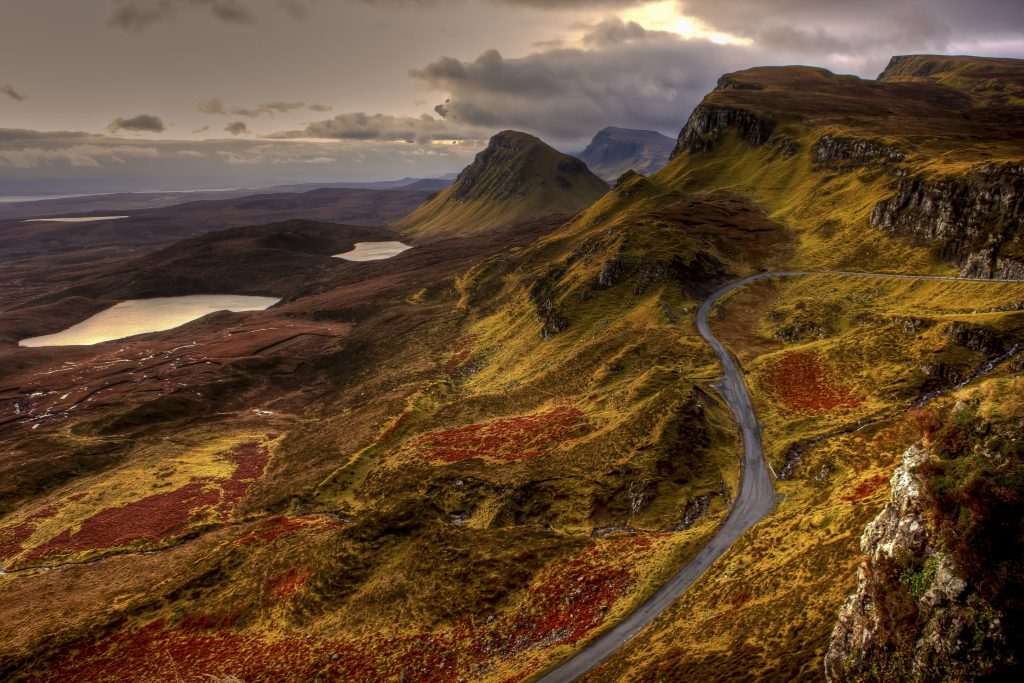
As you can see in this picture, the Scotland landscapes are truly delightful, someplace that the Ancient Romans would call locus amoenus, which is and idyllic scenery.
This isn’t the only reason for the historical importance of the Angus region for the Scottish citizen. It is considered indeed the birthplace of Scotland, because here the King of Scotland signed the Declaration of Arbroath in 1320, asserting the nation’s sovereignty. Today, the Angus region is a flourishing place for having holiday outings, thank to its green area and to its range of entertainment things that can amuse you. If you want to know more about what to see and what to do in the Angus region, you should keep reading!
What is Angus region famous for?
You could ask yourself if the Angus region is famous only for historical reasons. As you read in the previous paragraph, we can define the Angus as the birthplace of the entire Scotland culture, so it is no small matter. Actually, this is not the only reason that should push you visiting this area. You should have heard about the Angus meat, that is usually offered in restaurants. You need to know that this small beef cattle is the most breed all around the world. If you go to Argentina, Australia, Canada, USA or Germany, you will find Angus breedings. The interesting thing is that the Angus cattle was born in Scotland. The breedings all around the world are the consequences of importing this specie. Even if today you can taste a perfect American Angus meat in Dallas, this beef cattle was first recorded in the counties of Abeerdenshire and Angus. If you are from the USA, you should check out this awesome guide to the US lottery. This is why the popular name of the animal is Aberdeen Angus. The first reason for you to visit this region, so, is to discover the birthplace of one of the most famous breed animals in the world.
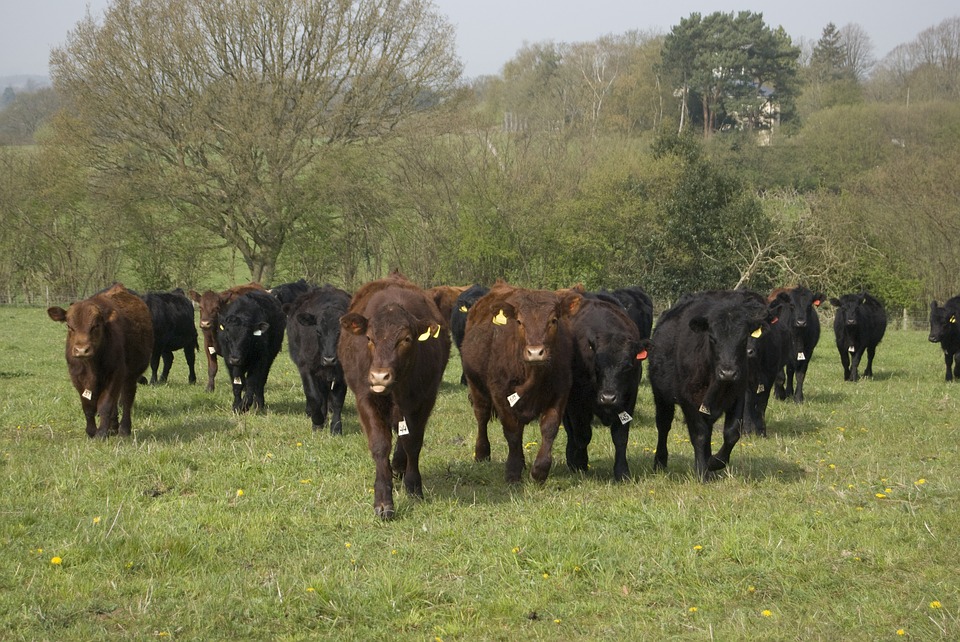
Here you can see a mixed herd of Red and Black Angus. If you know a lot about catering, you’ll know that the most famous kind is the black one.
You need to know that in the Angus region there is only one city, but it is surrounded by a lot of small villages and town. In this area you will find Dundee, an industrial city and the most populated one in Angus. However, we are talking about 150,000 people, which are nothing compared to the biggest Scottish cities of Edinburgh or Glasgow. You will understand how the hidden gems are the small villages around Dundee, such as Arbroath, a small fishing port 16 miles from Dundee. It is very famous for its declaration, that we mentioned previously, for his abbey and for the Keptie Pond, a beautiful park wrapped around a small lake. It can be pretty romantic, so the perfect destination for a couple in love.
Apart from what we told you until now, there are a lot of things you can do in the Angus region, that is the ideal place for those who love the excursions and the food tour.
What to do during your visit to Angus region?
Besides Arbroath, another beautiful village you need to visit is Montrose. One of its attractions is the Red Castle. We ask you to imagine a wonderful landscape covered in grass and a small red castle that come up from the ground. This is the Red Castle, the ruins of a manor dating back to the 15th century. It was built of red sandstone, so here it is the reason to its color.
Thanks to its enormous green areas, the Angus region is the ideal place for those who are in love with golf. Both beginner and experienced golfers will find the perfect golf course in Angus inland. You can choose between more than thirty golf courses!
We have talked to you about Keptie Pond in Arbroath. Actually, you can find a lot of beautiful parks in Angus. An example is Monikie Country Park in Monikie, North-East of Dundee. Here you and your children can have fun in the exciting High Ropes course, suitable for toddler of all ages. In Monikie Country Park you will be able also to entertain yourself in windsurfing, sailing and canoeing.
If you love hiking, both alone or with your friends, you’ll find wonderful paths all around Angus. We could suggest you Seaton Cliffs, where you can explore the sea caves in Scotland or the famous Devil’s Head. Try to discover the origin of this name! Otherwise, you could try the Corrie Fee Nature Reserve, that was formed during the Ice Age by the ice melting and where you can hope to see the golden eagle.
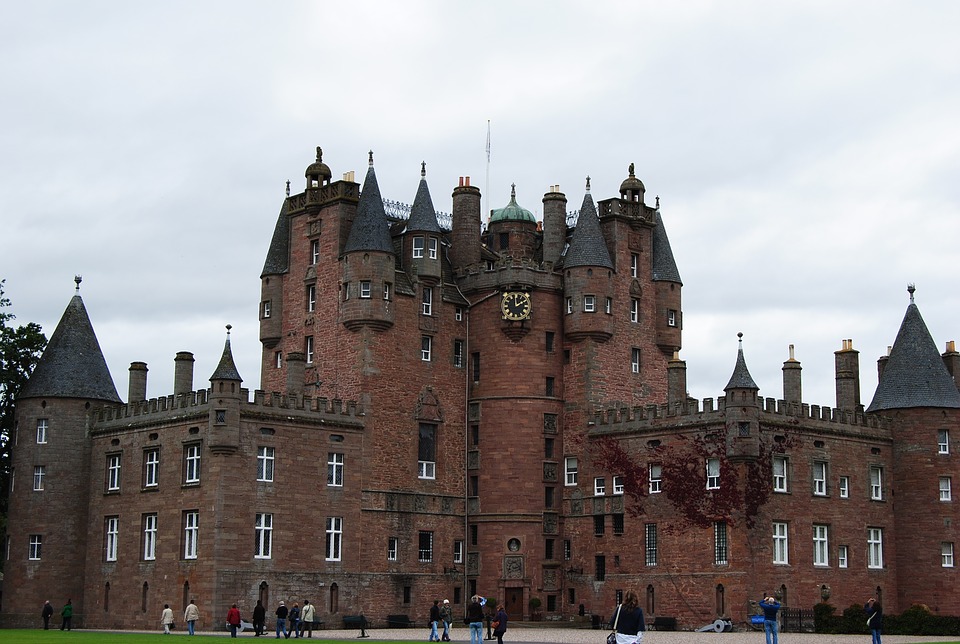
This is another attraction in Angus. It is the Glamis Castle and it’s open to visits even if it is the official residence of Strathmore and Kinghorne Counts.
Finally, you can taste a lot of different things during your journey in Angus. The first thing we suggest you, obviously, is the Angus beef. Let’s not forget that the Angus region overlooks the sea, so you should probably try the Arbroath Smokie. It is protected by UNESCO and it’s a type of smoked haddock. Of course you should go visiting Arbroath for tasting this delicacy. Scotland is particularly famous for whiskey production. Every county here has its own distillery and brand and every county is very proud of it. This is why you can’t leave Angus without tasting Glencadam the Scottish distillery formed in 1825 in Brechin.
We know that we convinced you visiting this wonderful place. If it isn’t so, let us tempt you eventually with this beautiful video from Youtube that shows the marvelous Arbroath Cliffs.
As you can see, the Angus region is full of special experiences you can try. But how can you reach this beautiful area of Scotland? Keep reading to know how!
How to reach Angus
You could think that as this region is very wild, it is also difficult to reach. Nothing could be more wrong! It is very easy to get to the Angus region, even if you don’t have your own car and you need using public transports.
- If you own a car, from Central Belt of Scotland, you must follow the signs for Dundee. While if you come from Inverness or from the North of the country, you must follow the directions for Coupar Angus and then for Forfar. From Aberdeen, you have to follow the A90.
You can choose between travelling by coach or by train.
- Travelling from Glasgow to Dundee by coach means almost two hours of travel time.
- You will reach Dundee by train in one hour and a half.